How to Clean Car Interior


Coffee spills on the seats, mud caked into the carpets, dust across the dashboard, a smell you can’t quite place: your interior takes more abuse than the outside ever does.
Cleaning a car interior yourself gets most of the way to a professional result for a fraction of the cost. Professional interior detailing runs $100-300 for a standard car, more for SUVs or heavily soiled cabins.
The gap between a ruined attempt and a clean result comes down to one thing: knowing what you’re cleaning before you touch it.
Most people grab whichever product is closest, soak the wrong surface, and end up with cracked leather or a carpet that smells worse than when they started.
If the outside needs work too, the full process for washing a car at home covers the exterior end to end.
- Check what each surface is before you clean it; the wrong product on the wrong material is what ruins interiors.
- A carpet extractor pulls out far more embedded dirt than soap and water, and renting one runs $25-40 a day.
- Leather, cloth, synthetic, and Alcantara each need their own cleaner; no single product works safely on all four.

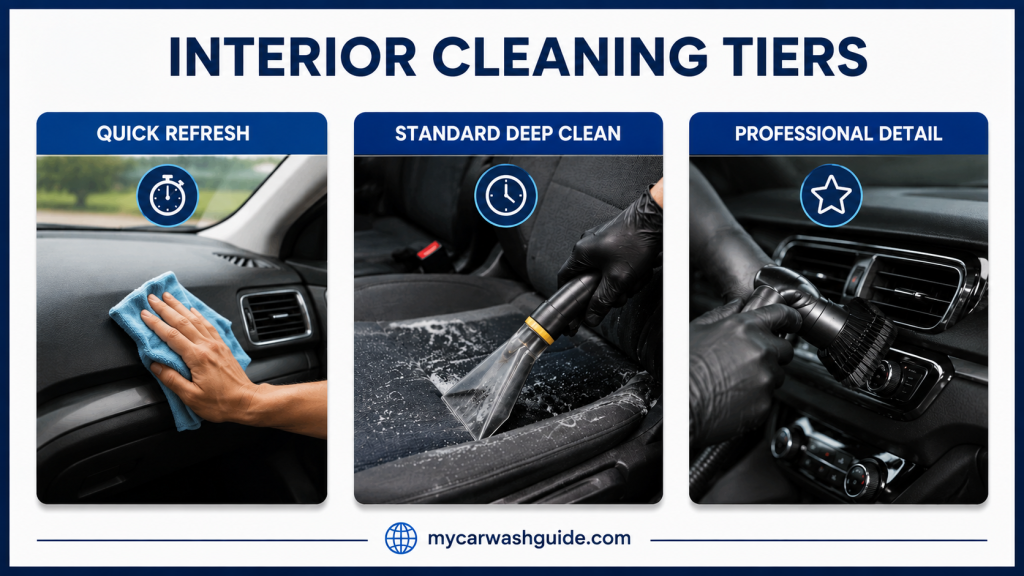
Cleaning Tiers & Time Commitments
Not every cleaning session needs a full day. Some messes take 15 minutes, others need a proper afternoon match your effort to what the car actually needs.
Quick Refresh 15-20 Minutes
Vacuum carpets and floor mats, about 5 minutes. Wipe the dashboard, steering wheel, and door panels with a damp microfiber cloth in circular motions, another 8 minutes.
Spot-clean any visible spills by blotting with a damp cloth, spraying the right cleaner, then blotting dry, the remaining 5 minutes.
No equipment needed beyond a vacuum and microfiber cloths. Do this weekly and you’ll rarely need anything more intensive.
Standard Deep Clean 2-3 Hours
Vacuum everything thoroughly, including under seats and between cushions about 20 minutes.
Shampoo cloth seats with an enzymatic cleaner diluted 1:10, scrub gently with a soft-bristled brush in circular motions, then blot repeatedly until the water runs clear. That takes around 45 minutes.
Extract the carpets next. Rent a carpet extractor for $25-40 a day, or go the spray-and-blot route with towels; about 40 minutes either way.
Detail the dashboard, center console, and door panels with a microfiber cloth and the right cleaner, another 20 minutes.
For odors, sprinkle baking soda across all fabric surfaces, leave it overnight, and vacuum it up the next day. It pulls odor molecules straight out of the fibers instead of just masking them.
If you’re doing this at a self-service bay with a vacuum station, here’s how to get the most out of a self-service wash.
Professional-Level Detail 8+ Hours
This tier covers headliner foam cleaning high risk of water damage if you get it wrong plus compressed air for every crevice and vent, leather conditioning, fabric protection spray, and ozone treatment for odors that won’t quit professionals charge $150–300 just for that last step.
Only take this on if you’re confident in your technique; it’s easy to do real damage here.
Odor Elimination Methods
Surface cleaning removes visible dirt but not embedded smells. You need a multi-pronged approach.
Baking Soda
Baking soda at about $2 is the simplest option. Sprinkle liberally on carpets, seats, and floor mats. Leave 8-12 hours. Vacuum thoroughly. Repeat monthly for persistent odors.
Baking soda absorbs odor molecules from the fiber rather than just masking the smell.
Activated Charcoal Bags
Activated charcoal at $8-15 works without chemicals. Place bags under seats or in the cabin for 24-48 hours. It absorbs odors passively and is reusable for 1-2 months before replacement.
White Vinegar Spray
White vinegar spray at about $3 neutralizes biological odors like pet urine and mildew.
Dilute 1:1 with water. Lightly mist carpets and seats without over-saturating. Air dry with windows open. The vinegar smell dissipates in 2-3 hours.
Enzymatic Cleaner
Enzymatic cleaner at $12-25 targets pet urine, vomit, and mold at the molecular level. Apply directly to the affected area, let sit 15 minutes, then extract with a wet cloth. This is essential for pet owners.
Professional Ozone Treatment
Ozone treatment through a professional at $150-300 kills mold spores and odor-causing bacteria.
It requires professional equipment and a 2-4 hour treatment time. It’s the most effective option for severe embedded odors that won’t respond to DIY methods.
Prevention matters more than cure. Improve ventilation by cracking windows daily. Replace your cabin air filter every 12-15k miles. Fix AC leaks immediately. Dry wet carpets within 24 hours to prevent mold recurrence.

Damage Prevention
One wrong product choice ruins $500+ worth of upholstery. Know what to avoid before you touch anything.
Leather
Over-saturating it causes cracking and mold. Bleach and anything above pH 7 discolors it, and silicone-based protectants just leave a greasy film behind.
Test any product on a hidden spot first, stick to pH 4.5-5.5 cleaners, and condition every 3-6 months.
Cloth and Fabric
Bleach and oxygen-based stain removers cause permanent discoloration. Fabric softener kills water repellency, and scrubbing too hard causes pilling.
Stick to enzymatic cleaners with gentle circular motion, and always test colorfastness on a hidden seam first.
Headliners
The most sensitive surface in the car. Water saturation causes sagging, mold, and staining that won’t come out.
Skip liquid cleaners entirely; dry-brush only, spot-treat with the least moisture possible, and if any liquid does touch it, give it a full 24 hours to air dry.
Alcantara
Any liquid cleaner causes permanent dark staining that’s extremely hard to reverse. Dry brush only. For set-in stains, call a professional rather than risk it yourself, and apply a protective fabric guard spray before you ever use the seats.
Preventing Mold
Wet carpet that stays damp past 24-48 hours grows mold, which is the EPA’s own deadline for drying it out. Use a carpet extractor to keep water use minimal in the first place, open windows and run the AC to circulate air while it dries, and use a cabin dehumidifier if you have one.
Solve Specific Interior Problems
Every mess has its own fix, and using the wrong one usually makes it worse. Here’s what actually works for the messes you’ll run into most.
Coffee and Beverage Stains
Blot immediately to soak up as much liquid as possible. Spray an enzymatic cleaner, such as Tide diluted 1:10, over the spot; let it sit 10 minutes, then blot repeatedly with a damp cloth.
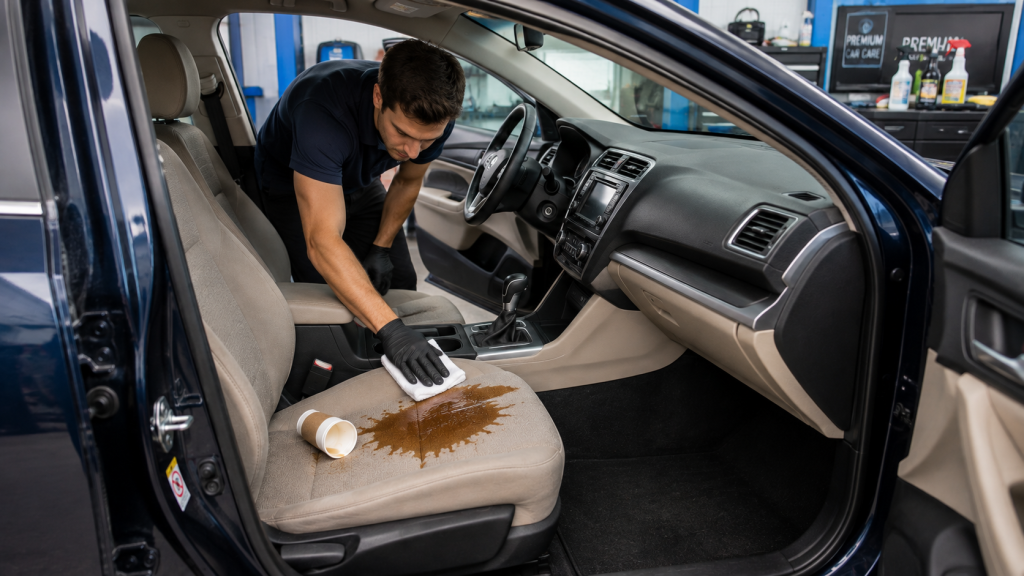
This method is for cloth and leather seats if the stain’s on Alcantara or the headliner, skip the liquid spray and see the Damage Prevention section above for the dry-brush method instead.
Pet Hair
A lint roller works, but a rubber broom afterward gets what the roller misses; it scrapes hair loose from fabric better than anything else.
Vacuum once you’re done; between the two, you’ll clear out nearly all the visible hair. If urine odor is part of the problem, follow up with an enzymatic cleaner.
Mud and Dirt on Carpets
Let it dry completely before touching it; wet mud just smears deeper into the fibers.
Once dry, vacuum aggressively to knock particles loose, then spray with a mild soap solution and extract. Drying first gets you far cleaner results than trying to lift it wet.
Grease Stains
White vinegar, diluted 1:1 with water, breaks down oil effectively. Spray it on, let it sit 5 minutes, then wipe clean; repeat 2-3 times for grease that’s really set in. Skip silicone-based degreasers; they just leave their own residue behind.
What I’d Leave to a Pro
After years of doing this on my own cars, the honest line is this: I’ll handle anything up to a standard deep clean, but I don’t touch headliner foam or a stained Alcantara seat. Both go wrong fast, and the redo costs more than the detailer would have.
For odors, I’d skip renting an ozone machine. Baking soda overnight plus an enzymatic cleaner clears most smells for under $15, and ozone is only worth paying a pro for when a car genuinely reeks of smoke or mildew that won’t lift.
Past that, a clean interior isn’t one big effort. It’s the weekly five-minute habits that stop dirt becoming a stain, the same way a regular wash schedule keeps the outside from ever getting bad.