How to Wash a Car in Winter Without Damage


Winter car washing feels counterintuitive. You’re adding water to your vehicle right when temperatures are dropping. But salt and de-icing chemicals sitting on your paint cause far more damage than the cold ever does.
The real threat isn’t sustained freezing. It’s the freeze-thaw cycle, temperatures swinging above and below freezing, that lets moisture into paint cracks, where it expands and triggers rust from the inside out.
Three rules keep the wash from backfiring do it on a day above freezing, ideally above 4°C or 40°F, use lukewarm water instead of hot, and dry the car completely before the temperature drops again.
Skip any of those and you’re trading one problem for another.
The de-icers most regions spray now, magnesium chloride and calcium chloride, are hygroscopic, which means they pull moisture out of the air and stay damp on your car long after plain rock salt would have dried out.
Wet salt keeps corroding metal instead of sitting there harmlessly, and that’s exactly why a winter wash matters more than one in July.
- Wash every 2-3 weeks in winter, not monthly; salt builds up faster than most people expect.
- Self-serve bays with heated water beat home washing in deep cold; there’s no pooled water left to refreeze.
- Seal the paint with wax or a coating right after drying; that layer is what actually blocks the salt.
Why Freeze-Thaw Cycles Damage Cars
Cold weather alone doesn’t cause rust. Salt sitting on paint at a steady -10°C does surprisingly little on its own. The real damage starts when temperatures swing back above freezing, then drop again days later.
Here’s the mechanism moisture works into microscopic cracks in your paint and clear coat.
When it freezes, it expands by roughly 9% in volume, prying those cracks wider and lifting the protective coating with it.
Repeat that a dozen times over a winter and bare metal starts oxidizing. What began as a hairline crack turns into a visible rust spot by spring.
Modern de-icers make it worse. Magnesium chloride is more corrosive to bare steel than the rock salt it replaced, and because the brine stays wet, it keeps working on your metal through every freeze-thaw swing rather than sitting there dry.
That’s the real case for winter washing. It isn’t about looking clean, it’s about stopping the cycle before it starts. The rest of the year runs on a different schedule, laid out in how often you should wash your car.

Winter Wash Kit
None of this needs specialist gear. A basic winter kit covers it.
- A pH-neutral car soap. Dish soap strips wax, so skip it.
- Two buckets with a grit guard, plus a soft wash mitt.
- A microfiber drying towel.
- An electric leaf blower, or the compressed-air wand at a self-serve bay.
- A silicone or PTFE lubricant for locks and hinges.
- Winter-grade wax or a spray-on ceramic sealant.

Washing Technique & Focus Vulnerable Area
Use a pH-neutral car soap and skip dish soap; dish soap strips wax and leaves the paint more exposed to salt.
Run a two-bucket method, one bucket for soap and one for rinsing your mitt, so grit lifts off instead of getting dragged across the paint.
The Undercarriage
The undercarriage is where rust starts before you ever see it, so give it close to half your wash time. It’s the part detailers single out as winter’s biggest corrosion risk.
Use a moderate-angle spray around 1,200 to 1,500 PSI enough to break salt crystals loose without driving water up into the suspension components.
Keep the nozzle at least 8 to 12 inches from the surface; closer than that, and the pressure can chip paint or force water past door and window seals.
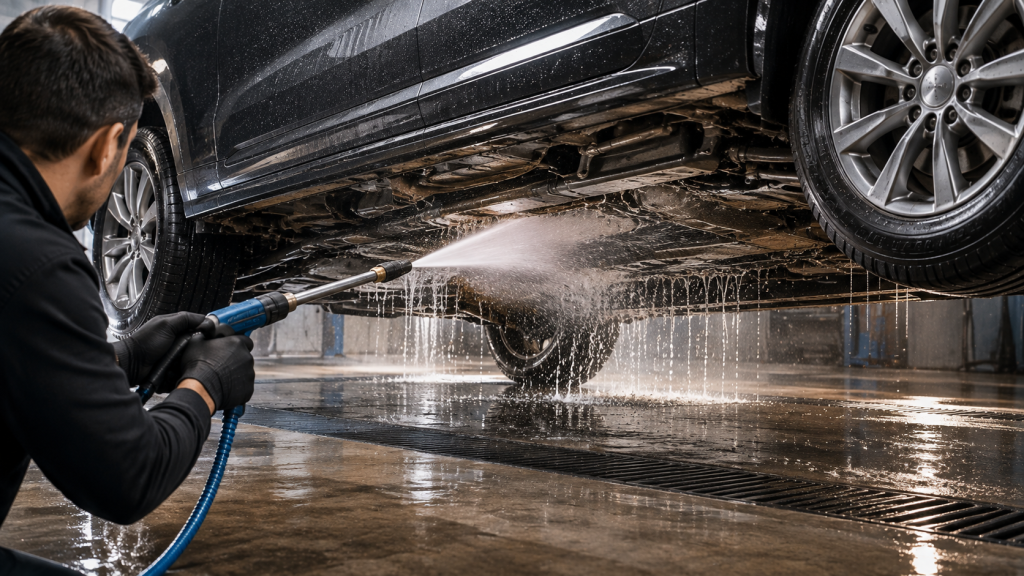
If you can, turn the wheel while you spray. Salt builds up thickest on the inner edges, and you’ll miss most of it with the wheel facing straight.
Door jambs, hinges, mirrors, lock cylinders, and door seals all need the opposite approach a light spray, dried immediately with compressed air.
Water sitting in any of these overnight will freeze and jam whatever it’s touching a hard blast just forces more water into the gaps you’re trying to keep dry.
Preventing Frozen Locks and Hinges
Apply a silicone-based lubricant or de-icer to door locks and hinges within 15 minutes of finishing the wash.
Skip water-based products; they just refreeze and make the problem worse. Silicone or PTFE-based lubricants repel moisture instead of trapping it, so the mechanism keeps working through the cold.
Open and close each door two or three times afterward. That works the product into the lock mechanism itself, not just the surface.
Drying Timeline and Tools
Give yourself 30-45 minutes to dry the car before sunset or before the temperature drops again. Miss that window and you refreeze water onto every surface you just cleaned.
An electric leaf blower speeds this up a lot, especially in tight spots; use it within 15 minutes of your final rinse, while everything is still workable.
At self-serve bays, the compressed air attachment works just as well on door jambs and lock mechanisms. Keep the pressure low so you’re not forcing water deeper into the crevices instead of out of them.
Wipe mirrors, windows, and chrome trim with a microfiber cloth right after rinsing. These ice over fastest, and a dry cloth here takes ten seconds.
Wheel wells and the lower undercarriage deserve the same urgency they hold the most water and the most salt, so leaving them wet undoes most of what you just did in the wash itself.
Drying technique and which towel you use matter more than most people think, and the drying methods ranked by safety cover what works and what leaves streaks.
Apply Protective Coating After Washing
Apply ceramic coating or winter-grade wax within an hour of drying, while the paint is still clean and dry. This is the step people skip most and it’s the one that actually seals the paint against salt.
Winter-grade wax gives you a hydrophobic barrier that sheds salt spray before it sits long enough to do damage.
A spray-on ceramic coating goes further it holds up for roughly 3 to 6 months and cuts down on water spotting through repeated freeze-thaw cycles.
If you’re laying it down yourself, the step-by-step method for waxing a car by hand covers the technique and which products are worth buying.

Given how often winter washing happens every 1 to 2 weeks during active salt season wax wears down faster than it would the rest of the year.
Plan to reapply every 3 to 4 washes rather than waiting for it to visibly fail.
Don’t stop at the paint. An undercarriage sealant or rust inhibitor on wheel wells, door sills, and exposed fasteners stops salt from bonding directly to bare metal, which is where hidden corrosion actually starts.
Skip it and everything else you did today only protects half the car.
How Often to Wash in Winter
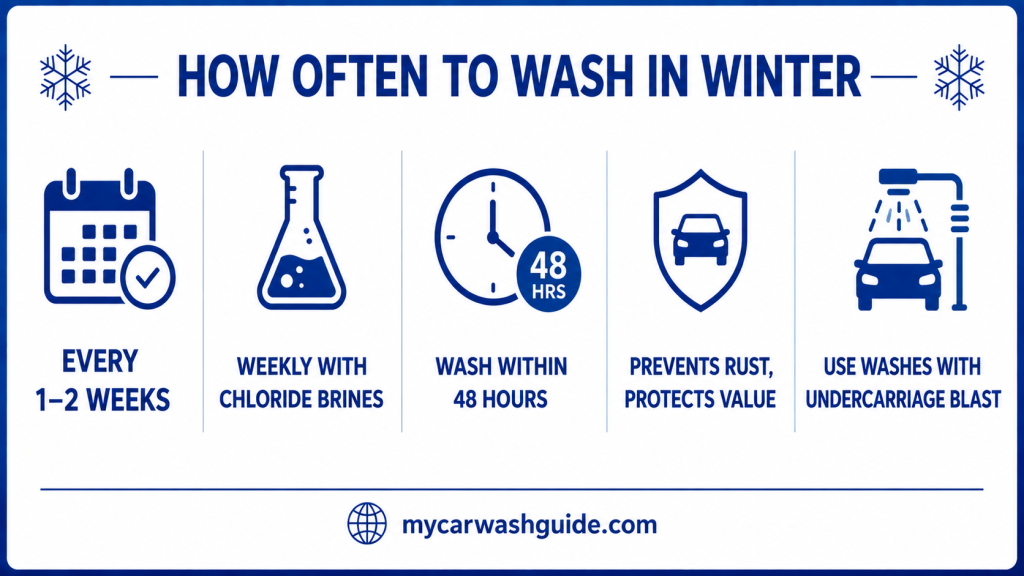
Wash every 1-2 weeks through winter. Salt, sand, and de-icing chemicals build up faster than most people expect.
If your region sprays magnesium or calcium chloride instead of rock salt, bump that up to weekly; those brines stay wet and corrode faster.
After a heavy snowfall or a fresh salt application, don’t wait the full two weeks; wash within 48 hours. That’s the window before a freeze-thaw cycle starts working the salt into your paint.
This is the single habit that does the most to prevent rust. Skip it for a season and you’re looking at undercarriage corrosion that shows up as a resale problem two or three years down the line, not just a cosmetic one.
Drivers in heavy-salt cities lean on commercial washes with heated undercarriage blasts, and the best car washes in Toronto show what that looks like through Ontario’s November-to-April salt season.
What’s Worth Doing and What to Skip
If I had to rank the steps, the exterior shine comes last. The undercarriage rinse and the sealant are what actually save the car; a spotless hood over a salt-caked frame is the wrong trade.
So on a genuinely cold week I skip the full driveway wash. Fifteen minutes at a heated self-serve bay to blast the wheel wells and underbody does more for the car than an hour of careful hand-washing that leaves water freezing in the door seals.
And when it’s below roughly -6°C or 20°F, or the car is caked in frozen mud, the home wash is a bad idea full stop.
A touchless wash with an undercarriage pass gets the salt off without the freeze-up risk, and it dries the car with heated air before you drive off.
The drivers who lose paint to winter usually aren’t the ones who wash a little sloppily. They’re the ones who don’t wash at all until spring, then find the rust already started.