Unlimited Car Wash vs Pay Per Wash

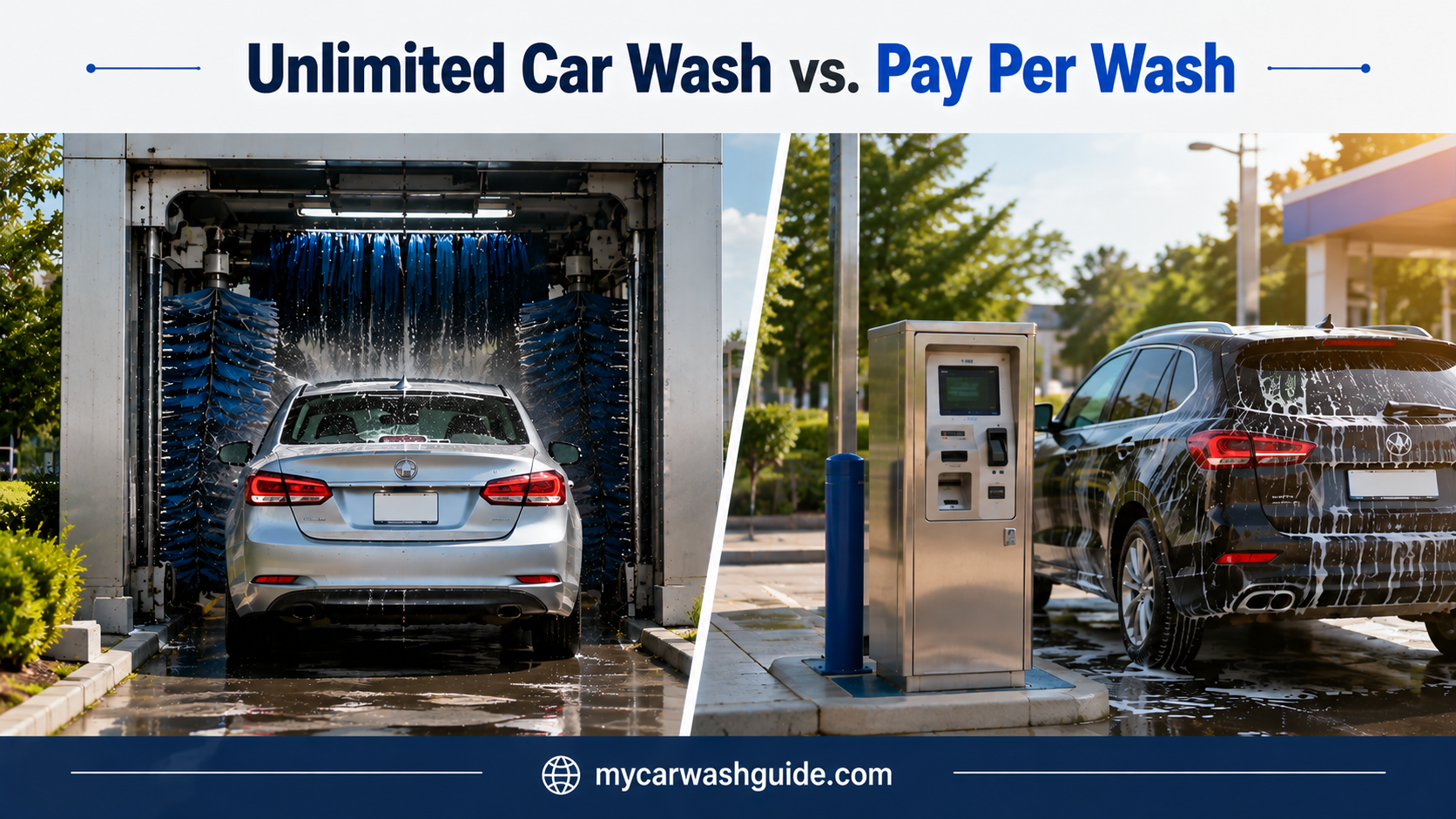
An unlimited plan beats paying per wash at roughly two to three washes a month, depending on how the plan is priced against a single wash.
Wash less often than that and you’re subsidizing the chain.
The catch is that the deciding number is your honest wash frequency, not the one you imagine when you sign up. Almost everyone overestimates it, which is exactly what makes these plans profitable.
- Buy the plan if you’ll genuinely wash two or more times a month pay per wash if you won’t
- Break-even sits at two washes when a plan costs about twice a single wash .
- Stretches to three washes when the single wash is cheap relative to the plan .
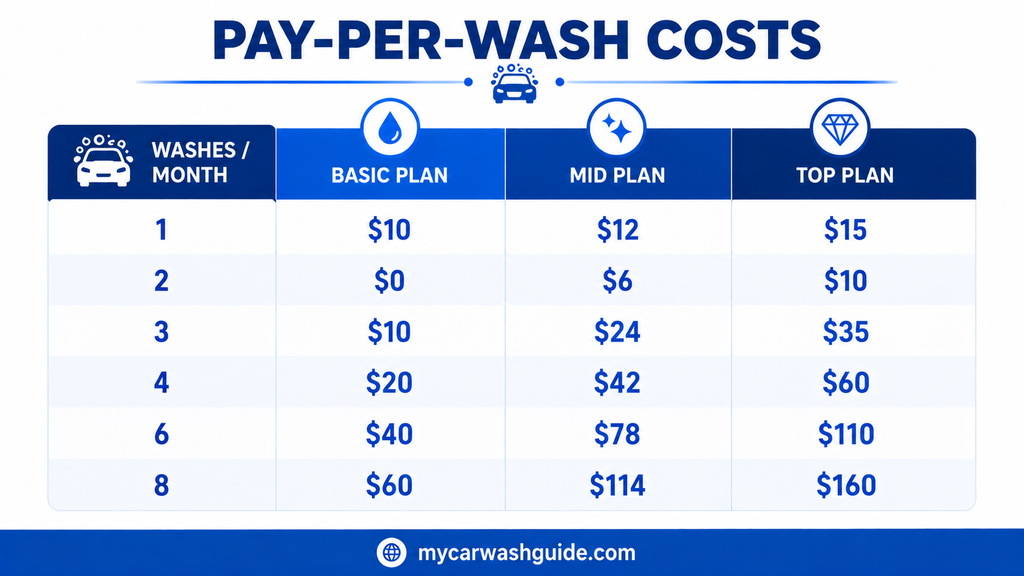
Pay-Per-Wash Costs
Find your row by how many times you actually wash per month, then read across. A positive number means the plan saves you money, and a negative number means paying per wash is cheaper.
| Washes / Month | Basic plan | Mid plan | Top plan |
|---|---|---|---|
| 1 | $10 | $12 | $15 |
| 2 | $0 | $6 | $10 |
| 3 | $10 | $24 | $35 |
| 4 | $20 | $42 | $60 |
| 6 | $40 | $78 | $110 |
| 8 | $60 | $114 | $160 |
The pattern holds across the industry the plan wins by more the higher the tier and the more often you wash.
To put it in annual terms, a mid-tier plan at four washes a month saves about $42 a month, which is roughly $500 a year against paying per wash.
While the same plan at one wash a month costs you about $144 a year for nothing.
Your real figures will differ by chain, so pull them from a specific brand’s page, like the Mister Car Wash unlimited plan or the Zips Car Wash membership page, and drop them into the same simple formula of washes times single price minus the monthly fee.
One quirk worth naming the higher tiers break even at fewer washes, not more, because the price gap between a premium single wash and a premium plan is usually wider.
That’s why the top-tier plan often looks like the best deal on paper even when it isn’t the tier you need.
Plans win on more than raw wash math, and the extras are easy to undervalue.
Unlimited Membership Benefits
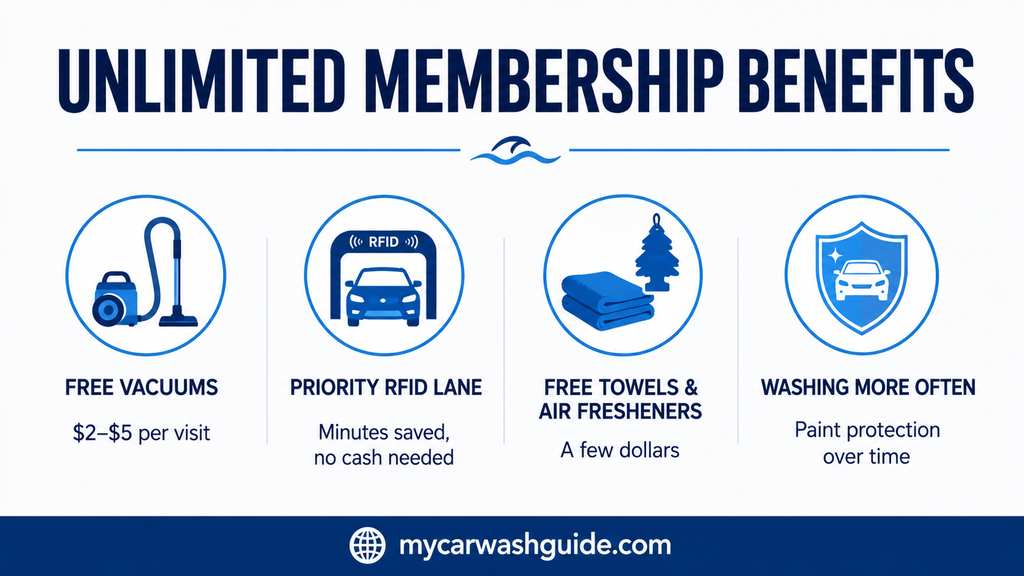
Free vacuums, priority lanes, and the behavioral push to wash more often all add real value a break-even table misses.
| Included Beyond Washes | Roughly Worth |
|---|---|
| Free vacuums | $2 to $5 a visit at pay-per lots |
| Priority RFID lane | Minutes saved, no cash needed |
| Free towels and air fresheners | A few dollars |
| Washing more often | Paint protection over time |
The quietest win is the frequency effect.
A prepaid plan nudges you to wash more, which keeps road salt and contaminants off the paint before they cause oxidation, and that protection is a genuine dollar value even if it never shows on a receipt.
Brand membership pages, like the Tommy’s Express TommyClub page, spell out the RFID lane and free vacuums that make the plan stickier than the wash price alone suggests.
Pay-Per-Wash Benefits
Paying per wash wins for occasional washers and anyone who travels. If you wash once a month or less, the plan is pure loss, and there’s no auto-renewal to forget about.
Single-location plans are the other trap.
If your plan only works at one site and you move or drive between cities often, you’re paying for access you can’t use, whereas a nationwide plan travels.
Paying per wash also means no proration surprises, since most plans, like Mister Car Wash’s membership terms, don’t refund the unused part of a month when you cancel mid-cycle.
There’s also the person who genuinely prefers hand washing and only uses a tunnel a few times a year for convenience.
Buying single washes keeps them free to use whichever chain is closest that day rather than being locked to one brand’s map.
Unlimited vs Pay-Per-Wash
| Factor | Unlimited Membership | Pay-Per-Wash |
|---|---|---|
| Best for | Frequent washers | Occasional washers |
| Payment | Fixed monthly fee | Pay for each wash |
| 2–3+ washes/month | Usually better value | Costs more as visits add up |
| 1 wash/month | Often poor value | Usually cheaper |
| Recurring charge | Yes | No |
| Wash frequency | Unlimited during membership | Only when needed |
| Flexibility | Tied to plan terms and locations | More freedom to choose |
| Extra perks | May include free vacuums, lanes, or other benefits | Usually fewer membership extras |
| Risk | Paying for unused months | Higher cost per frequent wash |
| Best choice when | You wash regularly and use the plan | You wash rarely or unpredictably |
Unused Membership Costs
The single biggest reason plans lose money for people is usage decay. You sign up motivated and wash five or six times the first month, then reality sets in.
By month four, most members have drifted to one or two washes a month while the auto-renewal keeps charging the full fee.
That gap between intended and actual use is the chain’s margin, and it’s why the honest move is to audit your last three months of visits, not your good intentions.
If you can’t remember the last time you used the plan, that’s your answer.
Tier Traps
Buying the top ceramic tier when you’d never pay for it per wash is a common, quiet overspend.
The plan only saves money against the tier you’d actually have chosen at the counter.
If you’d normally buy a $12 basic wash, comparing a $40 ceramic plan to that $12 wash is the wrong math, and the plan looks worse than a basic plan would.
Match the plan tier to your real habit, not to the upsell.
My arguable take is that most drivers should buy the middle tier at most, since the top-tier ceramic and graphene coatings reapply thinly each wash and do less than a proper wax twice a year, a point that ties into how often you actually need to wash.
Seasonal Buyers
Here’s the move almost nobody frames because these plans are month-to-month with no cancellation fee.
The smartest play for many drivers is to buy a plan for the three worst-weather months and cancel it. You don’t have to hold it year-round or avoid it entirely.
In a salt-belt winter or a heavy pollen spring, you might wash weekly, which is exactly when a plan pays off hard.
In dry summer months when the car stays clean, you cancel and pay per wash on the rare occasion you need one.

Published plan structures like the Delta Sonic unlimited plan terms confirm the month-to-month, no-fee setup that makes this legal and easy, and it’s one of the more efficient ways to use these subscriptions.
The only discipline it requires is remembering to cancel. Set a calendar reminder the day you sign up, because the auto-renewal is banking on you forgetting.