How to Remove Water Spots From Car


Water spots are mineral deposits hard water leaves behind once it dries on paint. The fix depends on one thing are the spots sitting on top of the clear coat, or have they etched into it.
Figure that out first, and the method picks itself.
Fresh surface spots come off with diluted white vinegar or a dedicated remover in minutes. Mix one part white vinegar with one part distilled water, spray it on, let it sit 2 to 3 minutes, then wipe with a microfiber cloth and rinse.
For tougher spots, a dedicated remover with chelating agents works faster and is safer on paint sealants.
Etched spots are different they’ve eaten into the clear coat, and no chemical fixes that. They need paint correction a clay bar to lift surface residue, then machine polishing to level out the etching.
Deep etching sometimes needs wet sanding first.
A few things make water spots worse washing in direct sunlight, letting soapy water air-dry, using hard tap water for the final rinse. Drying the car immediately with a microfiber towel or a blower prevents new spots from forming.
Drive a dark vehicle .Spots stand out fast on dark paint. Here’s how to wash a black car the right way, with the extra care it needs.
- Surface spots feel smooth and vanish when misted with water. Etched spots catch your fingernail and stay visible.
- Fresh spots wipe off with 50/50 white vinegar and distilled water, or a dedicated water spot remover for stubborn bonded deposits.
- Etched spots need machine polishing, not stronger chemicals.
- Dry the car right after washing never air-dry in the sun.

Fingernail Test vs Water Mist
This is the step that saves your paint, and almost every guide skips it. Reaching for a polisher on a spot that would’ve wiped off with vinegar removes clear coat you never needed to touch.
Two quick tests tell you which kind you have.
The fingernail test drag a nail lightly across the spot. Smooth slide means the mineral is sitting on the surface. A faint catch or divot means it’s etched into the clear coat.
The water test mist the spot with distilled water. If the ring disappears wet and comes back as it dries, that’s a fresh deposit a mild acid will remove. If it stays visible even wet, it’s etched.
| Spot Type | How to Tell |
|---|---|
| Surface deposit | Smooth to the nail; vanishes when wet |
| Etched | Nail catches; stays visible when wet |

Remove Fresh Surface Spots
Wash the car first with pH-balanced shampoo. This lifts loose dirt so you’re not dragging grit across the paint while you work.
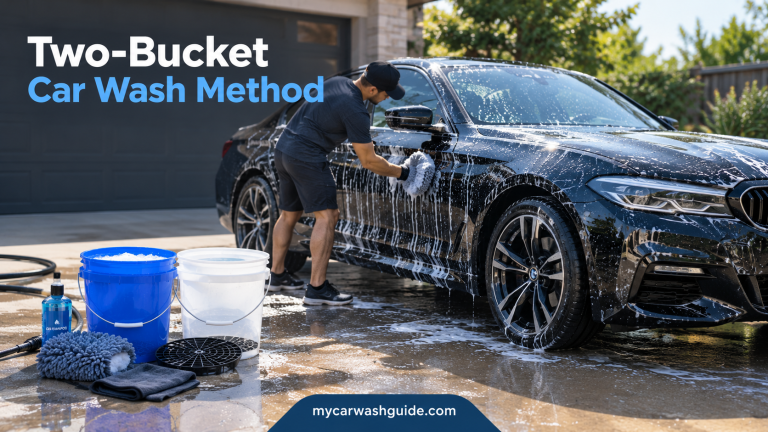
Our guide to washing a car at home covers the two-bucket method that keeps that grit off your mitt.
For fresh spots, mix equal parts white vinegar and distilled water, spray a small section, let it sit for two to three minutes, then wipe with a clean microfiber towel and rinse.
Work one panel at a time in the shade, and never let the solution dry on the paint.
If vinegar doesn’t fully clear a stubborn, bonded deposit, step up to a dedicated water spot remover made for automotive paint.
These use a stronger, paint-safe formula. Follow the label, keep it off glass and rubber trim, rinse thoroughly, and test an out-of-sight spot before doing a whole panel.

Etched Spots Need Polishing
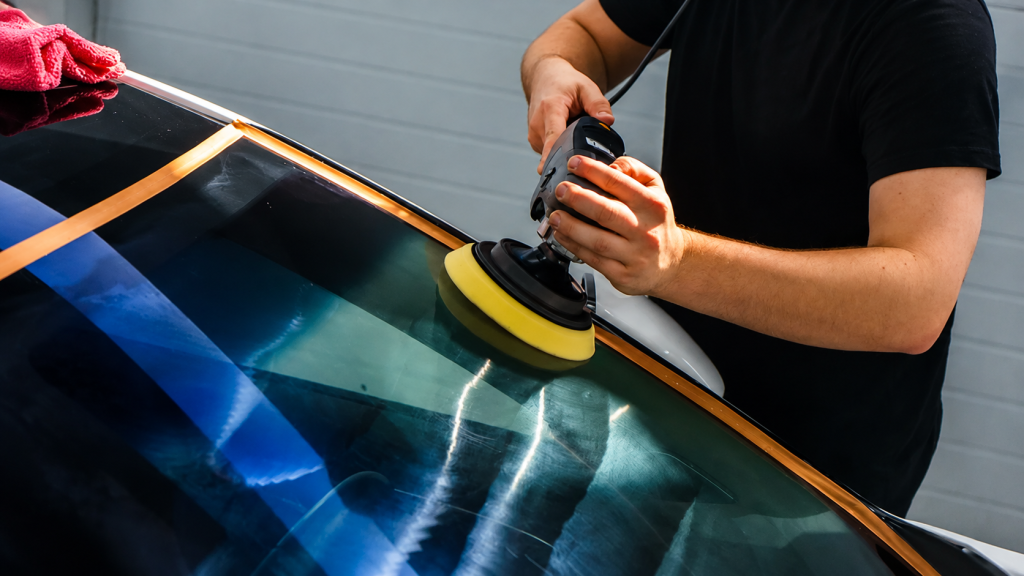
Once a spot has etched into the clear coat, no acid or remover brings it back. The damage is in the paint, not on top of it, so the only finish-safe fix is leveling the clear coat with a compound and polish.
Start with the least aggressive step that works. A finishing polish first, then a light cutting compound only if that fails. This removes the defect while leaving as much clear coat as possible for the life of the car.
Hand polishing works for one or two isolated spots. Modern clear coat is hard, though, so for anything more than that a dual-action polisher does what a hand pad can’t.
If the etching is deep enough that polishing would cut too far into the clear coat, the spot is permanent short of a respray which is exactly why catching spots early matters so much.
Once you’ve polished, seal the paint with a wax or synthetic sealant. Bare, freshly polished clear coat is more porous and picks up new mineral deposits faster than protected paint.
Matte Paint
Skip vinegar and acidic removers on matte or satin paint they can strip the low-sheen finish and leave a glossy patch behind.
Matte finishes can’t be polished the way glossy clear coat can, so a matte-safe chemical remover is the only move for surface spots. Deep etching on matte paint means repainting, not correction.
Water Spots on Glass
Windshields and windows spot the same way paint does, but hard water etches glass faster than it etches clear coat. Vinegar handles light spots here too.
For etched spots that won’t wipe off, cerium oxide polish restores clarity to glass, applied with a felt pad by hand or machine the glass equivalent of compounding paint.
Glass can’t be resprayed like paint, so catching spots early matters even more here.
How to Prevent Water Spots
Prevention is worth more than any removal method, because the fix for etching is slow and the fix for surface spots is a habit. A few small changes stop most spots before they bond.
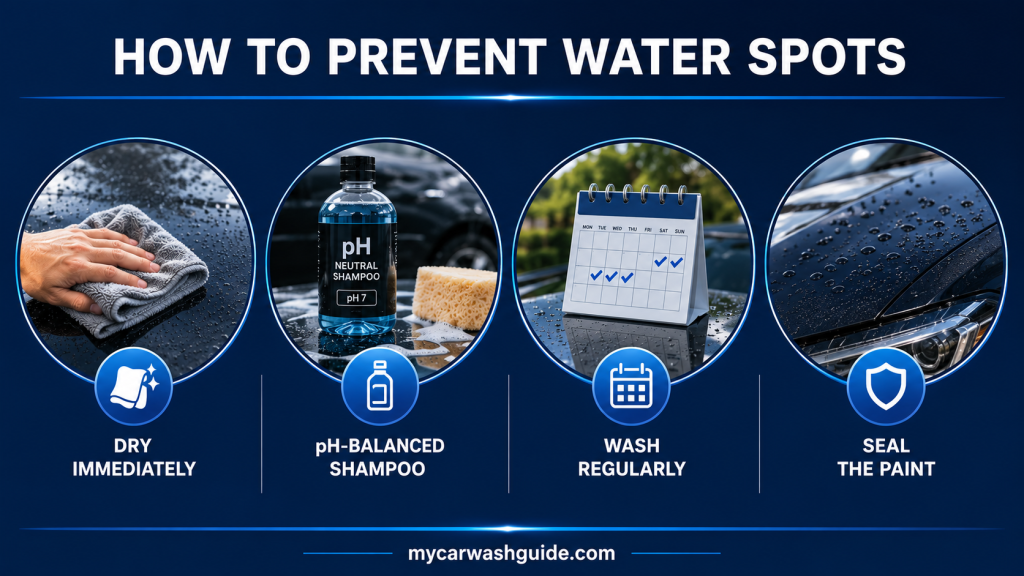
Dry Immediately After Washing
The fastest way to create water spots is to let the car air-dry, especially in the sun.
The water leaves and the minerals stay right where the droplet sat. Dry with a microfiber towel or a blower as soon as you rinse, and our guide to drying a car after washing covers the tools and technique that avoid spots entirely.
pH-Balanced Shampoo
A pH-neutral car shampoo, around 7 on the label, cleans without stripping the wax or sealant that helps water bead off.
Dish soap and cheap wash strip that protection and leave the paint more exposed to minerals. Wash within 24 to 48 hours of rain or sprinkler exposure so deposits do not have time to bond.
Match Washing Frequency to Your Water
Hard-water regions should wash weekly; soft-water areas can stretch to every two weeks.
A cheap water hardness test kit from the hardware store tells you which you have. For how frequency ties into overall paint protection across the seasons, our guide on how often you should wash your car covers the full picture.
Seal the Paint
Wax, a paint sealant, or a ceramic coating makes water bead and roll off instead of sitting and evaporating into mineral residue.
It will not make paint spot-proof, but it slows bonding and makes the spots that do form far easier to wipe away. Our guide to waxing a car by hand covers sealing your paint after a wash.
When to Call a Professional Detailer
A pro makes sense for heavy etching, large affected areas, or a vehicle you don’t want to risk. Professional-grade polishers and trained hands correct etching that DIY effort usually can’t.
Professional water spot removal or correction commonly runs $150 to $400, against $20 to $60 for DIY products plus your time.
A good detailer will also tell you honestly when spots are etched too deep to save, which is worth the consultation on its own.
Lean toward a pro if the spots cover a large share of the paint, your own attempts failed, or the car is high value. Most detailers will offer a ceramic coating after correction to make future spotting easier to manage.
Before booking, ask how they measure clear coat thickness before polishing a reputable detailer checks this first to avoid cutting through the clear coat.
Also ask whether the quote includes a wax or sealant application afterward, since bare, freshly polished paint spots again fast without one.
Full correction typically takes a half day to a full day depending on the vehicle’s size and condition.
The Approach I’d Take
Chase spots the same day you notice them. A spray bottle of diluted vinegar and a microfiber towel in the garage handles almost everything if you get to it before the minerals bond, and that habit is worth more than any product on the shelf.
I would also hold a firm line on aggression. Do not let anyone talk you into polishing spots that would have wiped off, since every polish thins your clear coat.
But do not waste three weekends on vinegar either. If the nail catches and the spot stays visible when wet, it is etched. Polish it or pay someone, and stop reaching for a bottle that was never going to work.
Frequently Asked Questions
How long does water spot removal take
Fresh surface spots take a few minutes per section with vinegar or a remover. Etched spots are a polishing job measured in hours, which is why speed matters so much.
Is water spot removal safe on black paint
Yes, if you wash first and skip scrubbing. Press gently with a clean microfiber towel rather than rubbing, and always start with the least aggressive method so you do not add swirl marks that show badly on dark paint.
Can water spots come back after they’re removed
Yes, if the paint isn’t sealed afterward wax or sealant right after removal keeps new deposits from bonding as fast.
Do water spots damage the paint permanently if left too long
They can, since heat and sun exposure let surface deposits etch into the clear coat over time, turning an easy fix into a polishing job.