A Complete Guide on How to Use a Touchless Car Wash


Touchless car washes skip the brushes entirely high-pressure water jets do the work instead, which means no bristles dragging grit across your paint.
That’s the whole appeal same convenience as a drive-through wash, none of the swirl marks.
But touchless doesn’t mean foolproof. Skip the prep, and you can still walk away with water spots, missed grime in tight spots, or streaks the jets couldn’t reach.
- Shift to Neutral instead of Park during the wash cycle to prevent transmission stress from vibrations
- Pre-rinse heavily soiled areas with a standard hose before entering the bay to maximize cleaning effectiveness
- Close all windows and fold in side mirrors to prevent water damage and operational interference
Prepare Your Vehicle Before Entry
Give yourself 5 minutes before you pull in. Close every window all the way the water pressure is strong enough to force its way through even a small gap and soak your interior.
Fold your mirrors in too, manual or electric, since an extended mirror can clip a spray nozzle and crack.
Take off anything that sticks out antennas, bike racks, roof cargo. Any of it can block the wash cycle or get knocked loose.
While you’re at it, check for loose trim, damaged seals, or a sunroof that isn’t fully closed all three are entry points water will find.
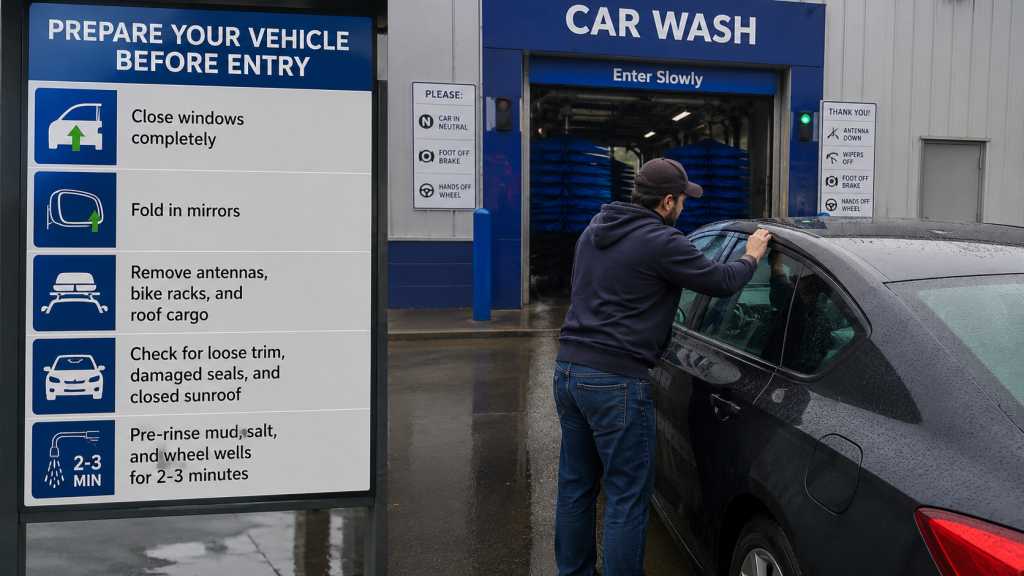
If the car’s caked in mud or salt, pre-rinse the wheel wells, undercarriage, and lower panels for 2 to 3 minutes before you even get in line.
That breaks the heavy stuff loose so the jets aren’t fighting it once you’re in the bay. Need somewhere to do that pre-rinse. Our self-service car wash guide covers how to get the most out of a bay visit.
Choose the Right Wash Package
Most facilities run a tiered menu. Basic packages pre-soak, soap, standard rinse run $8 to $12. Premium adds a spot-free rinse and wax coating for $15 to $25.
If you’re in a hard water area, pay for premium. The spot-free rinse is what stops mineral deposits from drying onto your paint before you even leave the bay.
Here’s why premium is worth it in hard water areas the spot-free rinse uses reverse osmosis water, which strips out 95 to 99% of the dissolved minerals in tap water.
Regular tap water contains dissolved minerals known as total dissolved solids, and those are what dry into visible spots on your paint. No minerals in the water means nothing left behind to dry into a spot.
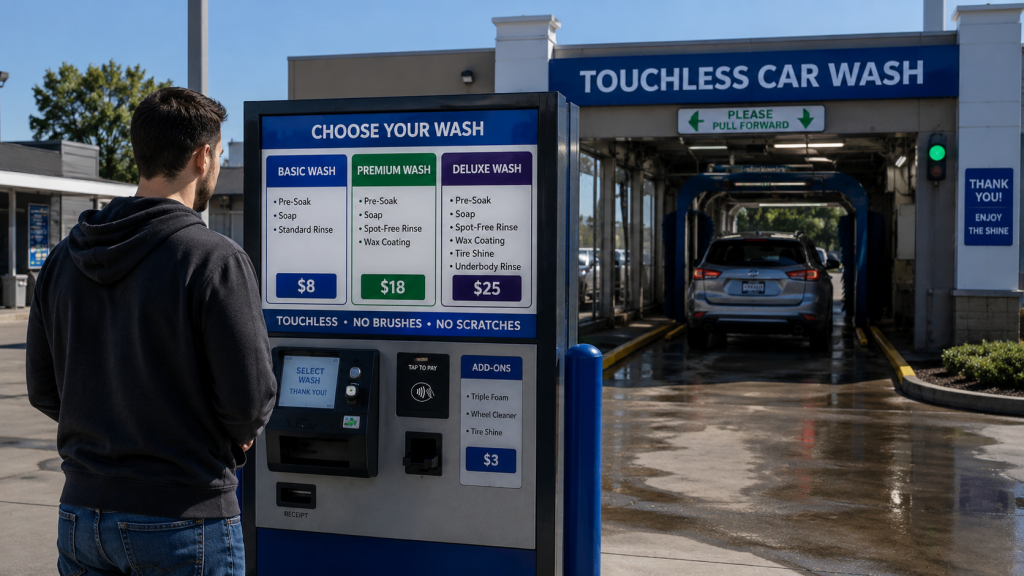
Skip the foam brush add-on if it’s offered. It’s still a brush touching your paint, which defeats the entire point of going touchless in the first place. Stick to jets only.
Touchless jets also won’t beat bird droppings, tree sap, or heavy caked-on grime those need direct contact to break down.
Plan on a manual hand wash afterward for anything like that. Our guide to washing a car at home covers the two-bucket method for those follow-up washes.
Touchless Effectiveness
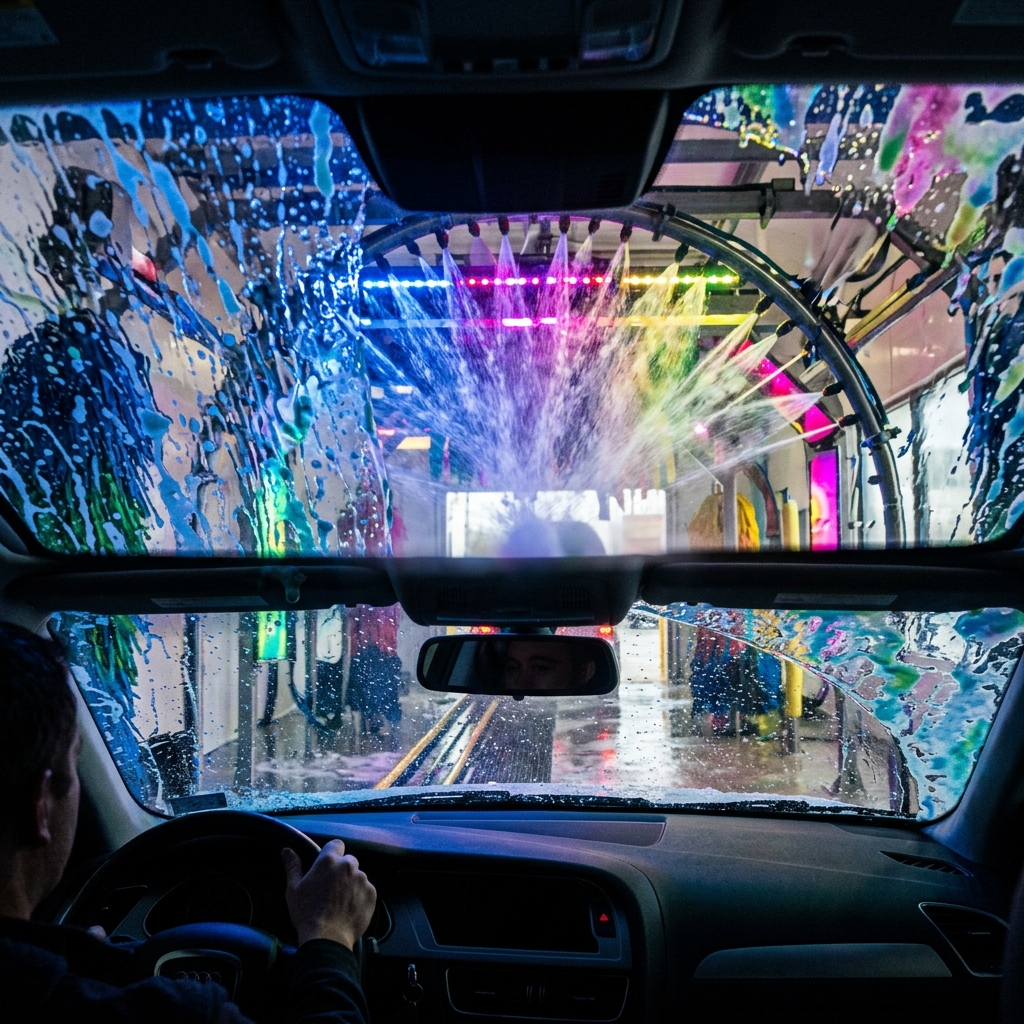
Touchless washes are inconsistent by design how well they work depends entirely on how dirty the car already is. They’re great for maintenance washes on a moderately dirty car.
They fall apart on heavy contamination, since there’s nothing physically scrubbing off bird droppings, tree sap, or caked-on salt.
There’s a reason touchless struggles with heavy grime the jets typically run at 1,000 to 1,500 PSI, and the cleaning power comes from a two-stage chemical process rather than brute force an acidic pre-soak breaks the bond between dirt and paint first, then an alkaline detergent dissolves road film and organic material.
Against caked-on mud or salt, that chemistry needs more time to work than a quick pass through the bay gives it.
Use touchless for regular upkeep, light dust, and anything where swirl-mark prevention matters most.
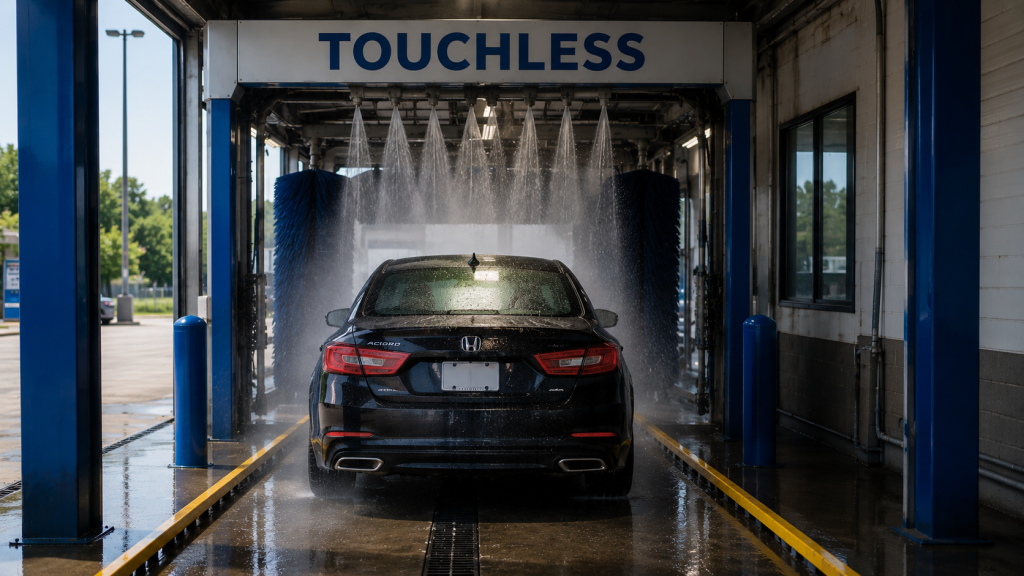
Skip it after off-roading, a winter of road salt, months of parking under trees, or if you can already see tar or sap spots those need contact to actually come off.
Drive a dark-colored car where swirls show up fastest Our guide on how to wash a black car covers contact-free methods built specifically for dark paint.
The two aren’t competing methods they’re complementary. Run touchless monthly to keep the car clean without adding scratch risk, then hand wash every few months to actually get into the grime touchless can’t reach.
Once you’re in the bay, the process itself is simple follow the prompts on the payment screen, stay in position until the cycle finishes, then pull out slowly and check your car over before you drive off.
Dry and Protect After Washing
Pull out of the bay slowly no hard acceleration. If you paid for the spot-free rinse, you shouldn’t see much water spotting at all, and a little air-drying in the sun usually finishes the job.
Live somewhere with hard water. Dry the car manually with a microfiber towel within 30 minutes of leaving the bay, before mineral deposits get the chance to set.
A quick detailing spray afterward adds a bit more protection and helps water bead off next time. For the full breakdown of drying tools and technique, our guide to drying a car after washing covers blowers, towel selection, and drying aids.
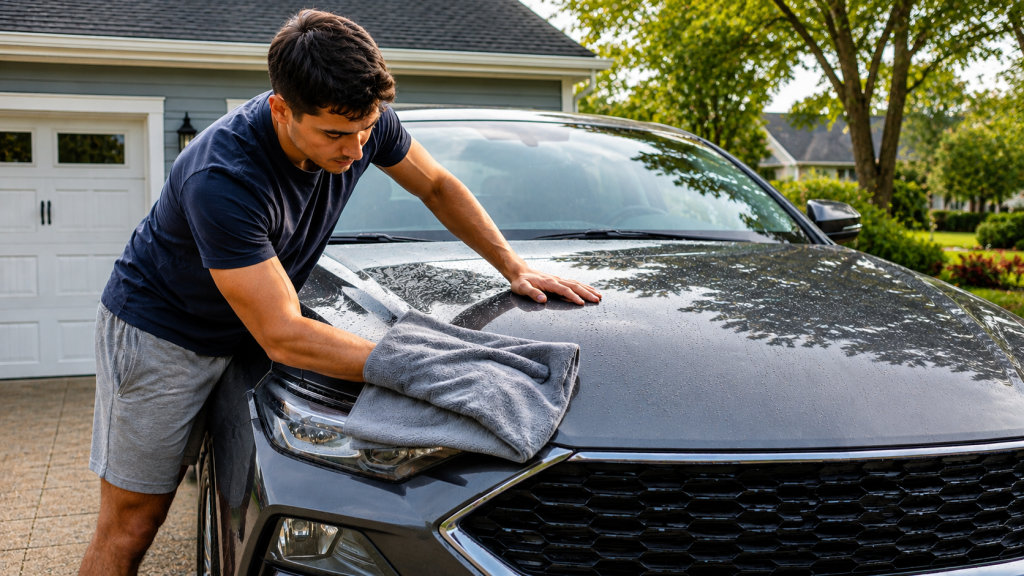
If spots have already formed, our guide on removing water spots from your car covers both household and commercial removal methods.
Give the car one last look before you drive off undercarriage and wheel wells especially. If those still look dirty, that’s your sign a manual wash is due next time, not another touchless run.
Touchless does one thing better than anything else it keeps brushes off your paint. That’s worth paying for on its own. But it’s not a replacement for a real wash it’s a maintenance tool.
Run it monthly, hand wash when the grime actually calls for it, and you get the best of both without ever risking a swirl mark on something a brush would’ve caused anyway.
FAQs
Can touchless washes damage my transmission
Only if you use Park instead of Neutral. Neutral eliminates transmission stress from vibrations, while Park can damage the mechanical lock mechanism over time.
How do I prevent water spots after washing
Choose a premium package with spot-free rinse, or manually dry the vehicle with a microfiber towel within 30 minutes. Hard-water areas benefit most from this step.